Category Archives: Uncategorized

The American Reviver

The American Reviver

I recently dived into a book I’d been keen to read for some time. ‘An American in Victorian Cambridge’ by Charles Astor Bristed – note the name ‘Astor’- was a revelation. Covering the period 1840-1845 he shines a light on the rarefied lives of the wealthy young men who ‘came up to Cambridge’.

As the grandson of one of the richest men in the world Bristed arrived at Trinity College, not as an ordinary fellow, but a young man, who in paying twice as much as other students, secured a place amongst the exclusive ranks of ‘Fellow Commoners’. Such ‘Fellows’, shared the same privileges as College Fellows, although they were usually a great deal wealthier than them. It was these privileged men who got to reside in gracious and spacious College apartments.

Not unsurprisingly Bristed was rapturous about the beautiful College buildings ornamenting the landscape of the world he inhabited. He was spell bound by the erudite professors he daily dined with. Using every nugget of wisdom to realise his dream of gaining the highest academic honours possible.

Sadly, he didn’t make the grade. But the author, whose late father had been a presbyterian minister, had the advantage of viewing Cambridge through the lens of a sober outsider. That legacy offers a priceless insight into town and gown relations and for the purpose of this piece a chance to introduce a drink famed for being the ‘American Reviver.’

Whilst this young American celebrated the chance to brush gowned shoulders with many of the greatest thinkers of the time, his presbyterian upbringing of self-control was at odds with what he witnessed around him. Despite many of those men, training for some of the highest positions in the Church of England, he was taken aback by their flexible approach to Christian behaviour.

It had been at his second evensong, on the third day after his arrival in Cambridge, as he bent to pray in one of the special carved seats reserved for Fellows, he received a discrete invitation. Would he like to walk to ‘Barnwell’ later that evening? A new friend enquired.

Barnwell was a newly built suburb on the edge of the town. Erected to house the multitude of workers flocking to Cambridge in search of a livelihood. It was in the tight streets of Barnwell that young women could be found. Woman willing, or ripe for persuading, to satisfy the carnal desires of charming young drunken men. Bristed declined the invitation.

Drinking, drinking to excess, fills many pages of ‘An American in Victorian Cambridge’. But a standout moment is Charles Astor Bristed’s introduction of ‘Sherry Cobbler’ to Cambridge and the vengeful saga surrounding it.

Charles Dickens

The Life and Adventures of Martin Chuzzlewit was published in twenty, monthly instalments, between January 1843 and July 1844, after which it came out as one bound volume. Dickens had visited America in 1842 in an unsuccessful attempt to persuade US publishers to honour international copyright laws. The lack of such an agreement enabled his books to be published in the United States without his permission, and, without royalties reaching his pocket. He wasn’t happy. In Martin Chuzzlewit, Dickens ridicules the country as a place filled with self-promoting hucksters. But there was one thing he did appreciate about American culture. The drinking of Sherry Cobbler. He gave it a big endorsement in the novel. Thus, by the summer of 1844 the reading public were curious about the drink, also referred to as the ‘American Reviver’, which was prescribed for Martin by his friend Mark Tapley and told in the scene below:

‘I am quite knocked up – dead beat, Mark.’

‘You won’t say that to-morrow morning sir,’ returned Mr Tapley; ‘nor even to-night, sir, when you have made a trial of this.’ With which he produced a very large tumbler, piled up to the brim with little blocks of clear transparent ice, through which one or two thin slices of lemon, and a golden liquid of delicious appearance, appealed from the still depths below, to the loving eye of the spectator.

‘What do you call this?’ said Martin.

But Mr. Tapley made no answer; merely plunging a reed into the mixture — which caused a pleasant commotion among the pieces of ice — and signifying by an expressive gesture that it was to be pumped up through that agency by the enraptured drinker.

Martin took the glass with an astonished look; applied his lips to the reed; and cast up his eyes once in ecstasy. He paused no more until the goblet was drained to the last drop.

‘This wonderful invention, sir,’ said Mark, tenderly patting the empty glass, ‘is called a cobbler. Sherry cobbler when you name it long; cobbler when you name it short.

Cambridge, Summer 1844

In July 1844 when Charles Astor Bristed and his fellow, Fellows, languished in the cool comfort of his rooms overlooking the willow lined river Cam, the question of Sherry Cobbler arose.

“Bristed did you ever drink Sherry Cobbler?”

“I have.”

“Can you make it?”

He had to confess it had been many years since he’d concocted one. The real problem, he said, lay not in recalling the recipe – sherry, soda, lemon, and crushed ice – but the difficulty of procuring some of the requisite materials. First, he had to find large tumblers, which proved not too tricky. But obtaining clear ice presented a challenge. In England ‘ice’ was understood as being ‘ice-cream’. The idea of simple, clear ice garnishing a drink, caused much astonishment. One of their number claimed they had influence with a local confectioner who they believed could make clear ice. The next thing was to find straws for drinking the liquid.

Imagine the puzzlement and hilarity of the two milliners Bristed accosted on the Market Square, Cambridge, in his quest for straws to drink from. Of course, young women were strongly discouraged from fraternising with members of the university. It could lead to arrest and imprisonment if done once darkness fell. But on that bright sunny summer’s day innocent giggles, and an eagerness to fulfil the request of a wealthy gentleman, led to an enjoyable experiment. Wheat stalks were baked to hardness in the oven. It worked. Keeping straw pliable was the usual task of milliners, but in this case, they did the opposite.

Six days later the tasting took place. As Bristed poured and mixed- the cobbler shaker was yet to be invented – ten curious pairs of eyes watched his every move. He mixed and muddled, he tasted, made adjustments, until finally satisfaction was reached.

He took an experimental suck, to educate his friends on the use of the straw and handed over a glass to the designated tester. The eyes of the party were now directed to the brave young man. Using one had to hold the glass, the other steady the straw. He bent his head down and applied his lips to the curious drinking apparatus pausing for one short moment, before greedily taking a longer draught. ‘It will do,’ he announced. High praise from an English gentleman. Straightaway every man seized a knife and a lemon, and the manufacture of cobblers went on.

It might not have been the first Sherry Cobbler made in England, but it was the first at Oxford or Cambridge, and remains Charles Astor Bristed’s main claim to fame.

Dickens, Charles: Martin Chuzzlewit

Stray, Christopher (ed) An American in Victorian Cambridge


Bloody Beginnings

Oxford, 1209: The shocked young scholar stared down at the dead body.  It wasn’t clear what had taken place in that room – perhaps a blind act of passion – but at the sight of the motionless girl, he instinctively feared for his life and knew he must take flight.

As the news of the young woman’s death, most likely a prostitute, spread, the people of Oxford demanded revenge.  First, the two friends who’d shared the scholar’s room were hunted down. They were dragged to the castle, then to the gallows.  In normal times, the ecclesiastical authorities would have exerted themselves and claimed immunity for those in minor religious orders.  The two scholars would have been saved. But in 1209, a quarrel between King John and Pope Innocent III regarding the appointment of a new Archbishop of Canterbury resulted in the King’s excommunication.  He wasn’t in the mood to look kindly upon the clerical scholars, so he did nothing to prevent their hanging. Unprotected from the mob, hundreds of fearful scholars fled Oxford in search of a new place to learn. Several settled on Cambridge.

This was the story as told by the monastic chronicler, Roger of Wendover (d. 1236), and vividly reimagined by Susanna Gregory in Bloody Beginnings.  Are the origins of Cambridge University due to the murder of a prostitute? We can only speculate. Yet alternative explanations are far less credible, wrote Rowland Parker in his 1983 book, Town and Gown: The 700 years’ war in Cambridge.

Whatever we might believe, it is a fact that the new arrivals in Cambridge were warmly welcomed. They were fair game to anyone who could turn a profit at their expense. Already, Cambridge was an important inland port.  It’s then tidal river flowed into the Ouse and into the Wash. The town housed the fifth-largest Jewish community in England and was edging its way into the top twenty wealthiest towns, ranked by tax.  The town had secured royal charters granting them many rights.  In 1209, Cambridge, in the eyes of the law, was a fully-fledged independent town, a free borough of free men, forever.

As more and more scholars arrived, many fleeing riots in Paris, the price of spare rooms doubled, as did the cost and quality of bread and ale.  No one thought the ‘foreigners’ would stay.  But as their numbers swelled, the novelty of their presence altered to a deep dislike of the arrogant behaviour of exuberant,  teenage boys away from home for the first time, with little supervision.  

They may have been undertaking religious study, but they weren’t all meek-minded serious scholars.  Many were younger sons for whom the ‘church’ would provide a living.  This was the first and last opportunity for them to enjoy carefree living.  Many, but not all, drank ale beyond their capacity and swaggered around town, believing they were men.  They sought and seduced susceptible women, sometimes with the promise of marriage. Insolent remarks were tossed at passing townsmen of any rank. A surprising amount could be tolerated whilst their presence remained peaceful and lucrative. But this was about to change.

The history of the long drawn-out rivalry between town and gown started in 1231 when Henry III sent a letter to the mayor and bailiffs of Cambridge telling them: a multitide of students, from this country and overseas, come to our town of Cantebrigge, which pleases us very much, for it benefits our kingdom and does us honour, and you must be pleased to have the students among you.  But we hear that the charges in your inns and lodging-houses are so exorbitant that, unless you do something to moderate them, the students will be obliged to leave your town, and we do not want that to happen. (Parker, p19)

Due to the many private vendettas between northern and southern scholars, and resentment from the young men of the town, bloodshed on the streets was not uncommon. In 1249, violent scuffles left several wounded or slain. Just over a decade later, a minor skirmish escalated into an alarming affray, resulting in the execution of 16 townsmen and the King pardoning 28 southern scholars.  The rift with Rome had been healed. Ecclesiastical law once again protected those training for holy orders. It was the townspeople who answered to the law of the land.

But overcharging and street brawling were not the only problems the King was invited to solve. In 1234, he issued letters patent prohibiting earls, barons, and knights from ‘tourneying’ to Cambridge for the regular tournament that took place just outside Cambridge.  It turned out that the chancellor was gravely concerned that the excitement of such an event would distract the scholars. 

Such tournaments took place up and down the county, with knights from all over the kingdom keen to show their prowess.  The Cambridge tournament was a smaller affair. Local nobility and gentry put on fine displays of valour and chivalry. It was a spectacular day out, attracting huge numbers eager to gamble, brawl and drink. There was no way the young scholars would miss out on this event.  But under the ban everyone missed out, especially the townspeople who’d once relied on the event to boost their income. 

Over the next two centuries Kings and Queens eroded the towns autonomy until Cambridge was managed to suit the needs of the university. It could be argued the case remains the same today.

Sources:

British History online

Cooper, C. H. Annals of Cambridge Vol 1(1843)

Parker, R. Town and Gown – The 700 Years War in Cambridge (1983)


Away with the Clerics – Cambridge 1381

Flames flickered and sparked into the late afternoon air as a bonfire of royal charters, books of learning, and university documents were turned into wafers of ash. Three days of looting, arson, and murder had reached their climax. The rioters were certain of victory and the end of oppressive rules forced upon them since the arrival of a group of scholars just over a hundred years earlier.

Six months previously, in December 1380, the Chancellor of the University of Cambridge had instructed the mayor to deal with ‘divers evildoers’ who’d appeared in the town. The amiable Burgomaster, however, had already spotted these so-called ‘evil doers’ but had little inclination, or any real power, to expel every ‘suspicious’ character whose face unsettled senior members of the university.

Exactly what happened in Cambridge during the next few months is not fully known. But plots were plotted, and secrets kept. The violence of the Peasants’ Revolt was spreading its way across East Anglia. Old scores were being settled. The townspeople had had enough of the meddling ways of the masters and scholars of the university. Men and boys in holy orders, protected by ecclesiastical law and continuously favoured by kings and queens, were forcing the townspeople into servitude. Resentment and thoughts of rebellion had steadily increased since the arrival of a band of scholar’s in 1208. Now seditious reinforcements were eager to aid their brothers and sisters against every injustice that hampered their freedom. 

On the morning of 15 June 1381, the rhythmic tolling of the great bell of Great St Mary’s Church, on the Market Square, was heard. It was the rallying cry the rioters had been expecting. A large crowd of townsmen, and ‘wastours’ gathered. The first target was a house in Bridge Street where Roger Blankgreen, the collector of the detested poll tax, lived. Quickly the crowd set to work looting and searching for the detested man, but Blankgreen had fled. He’d made it across the river to St Giles Church. But the angry mob found his hiding place and dragged him into the churchyard, where he was shown no mercy as his head was brutally severed from his body. 

That night, ‘at about 10 de la clokke’, the house of William Wigmore, Bedall to the university, was ransacked and burned. Simultaneously, another mob, led by the mayor, advanced on Corpus Christi College. A fierce fight between scholars and townsmen resulted in much injury and the death of a townsman. The bloodied victors carried off all the documents and books they could find. In the darkness and confusion of that night, other break-ins and robberies occurred, for which no one was ever brought to justice.

On the Sunday morning, while some of the townsmen rode out into the countryside to bring in more rabble-rousers, another mob surged into Great St Mary’s Church while mass was being celebrated. There, they seized a chest belonging to the university. Next, they smashed into the nearby Carmelite Friary, where the Chancellor was known to keep documents. There, they stole anther chest full of books and documents.

The loot was hauled to the Market Square. There, the heavily secured chests were levered open. Inside, the looters found jewels and plate, charters and documents relating to university privileges. Royal seals were ‘mercilessly broken with knives, sticks and other weapons’, and the chests themselves were sold to the highest bidders.

A bonfire fuelled by hatred, charters, documents, and books of learning was built. The haul blazed on the Market Square, a favoured place of protest, as the protestors yelled and danced in glee. As the flames consumed the precious manuscripts, an old woman called Margaret Starre flung a handful of ashes up to the sky, crying out, ‘Away with the learning of clerks, away with it’.

On the 1 July, the machinery of the law swung into action. The Assize court devoted that entire month to bringing the ringleaders, who hadn’t fled or were dead, to justice. Some were hanged, but most were imprisoned in the castle jail.

But the greater punishment came later that year. The King granted the Chancellor and Scholars of the University of Cambridge the rights to the licencing of the sale of bread, wine and ale, and the control of weights and measures. The town was £100 a year worse off and even more tightly under the control of those they had planned to crush. There would be six centuries of bitter unrest before those rights were returned to their original owners.


Donkey Common or Donkey Green?

grdonkeyb

So just to put you right it is Donkey Common or Donkey (‘s) Common.

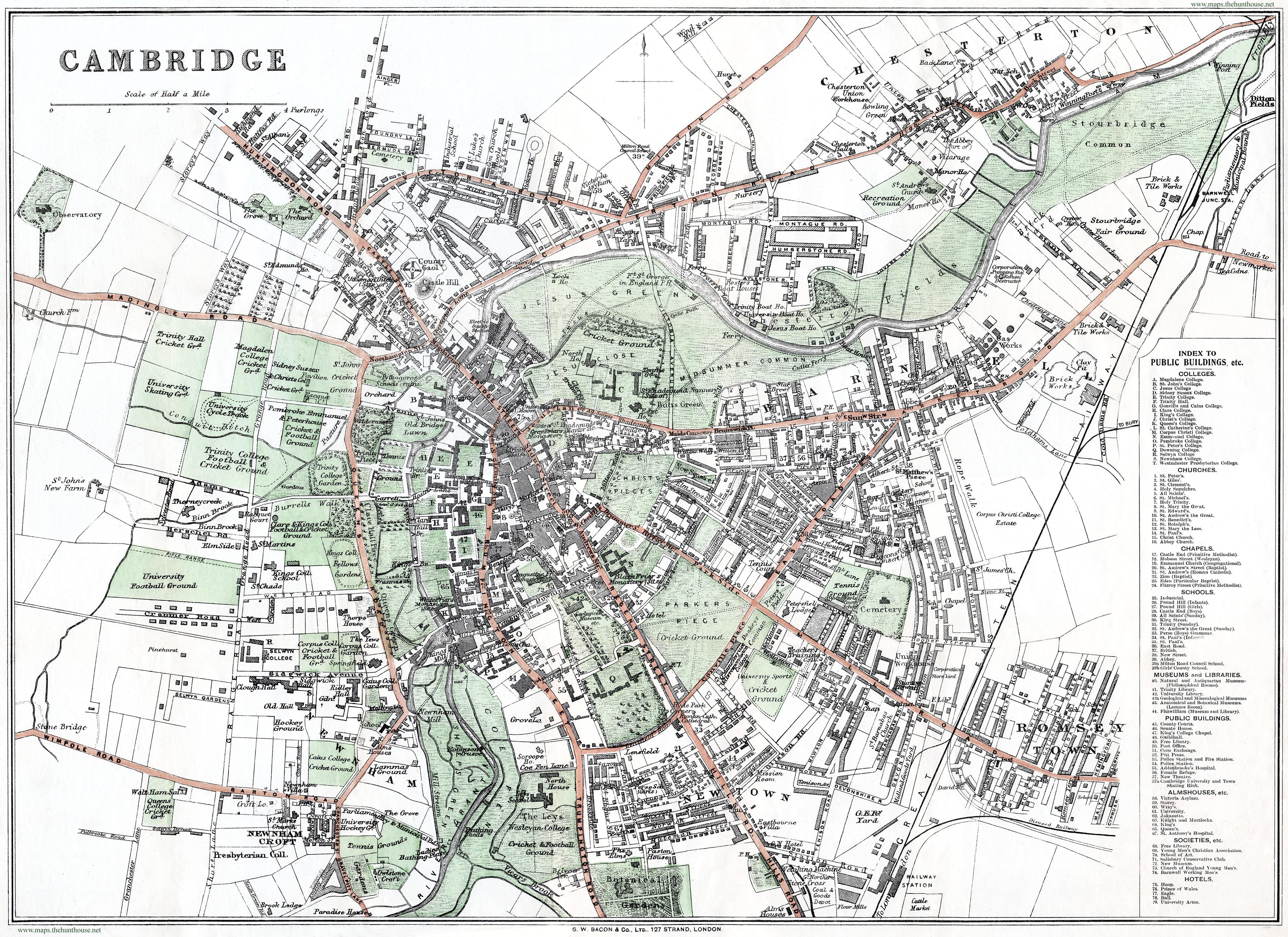
This was originally a piece of common land near Parkers Piece.  Some of it got made into Petersfield; the green on the other side of Mill Road. Part of it was built on and what remains is where MRWF erect a marquee to welcome people to the fair.


Large_Map_of_Cambridge

During World War II there were temporary A.T.S. huts on the common.

War time memories of Donkey Common (taken from BBC Archive)

Eventually we were given our postings and I was sent to Cambridge where there was a Holding Unit on a common called Parker’s Piece, and our section was Donkey Common.

The idea was that people would be sent there before going on to somewhere else … 

Our huts were wooden with wooden beds, and we slept on biscuits — a kind of mattress divided into three. There was a stove pipe in the middle of the hut and hut blocks were in an ‘H’ formation with washing facilities in the middle. As we lived on Donkey Common our C.O. decided that we ought to have a donkey so one was acquired. Two of us used to have to take the donkey to the blacksmith’s just off the main road near the station to be shod.

After the war when housing was in short supply there was a request to use these temporary shelters for much needed housing.

This extract comes from Hansard:

Surplus Huts, Cambridge

HC Deb 21 June 1949 vol 466 cc8-98

15. Mr. Symonds

Asked the Secretary of State for War if he will subdivide the campsite at Donkey’s Common, Cambridge, and hand over those huts, which are surplus to military requirements, to the local authority for emergency housing purposes.


In 1963 a swimming pool was built on the Common, followed by a multi story car park in 1971, YMCA in 1974 and Kelsey Kerridge Sports Hall in 1975.

A skateboarding facility was built in 2006.

Cambridge is surrounded by beautiful open spaces. Each one has a rich history that reflects the social and economic conditions of several centuries.


Mill Road Winter Fair

As the countdown for Mill Road Winter starts I thought it timely to give Mill Road a bit of a ‘shout out’.

It is hard to remember the early days of the Winter Fair when just a trickle of local residents curiously ventured along the road wondering what all the fuss was about.  However, behind the scenes local resident Suzy Oaks had a vision for an all-encompassing community celebration and was working tirelessly to put Mill Road on the map so others could experience its unique diversity.

Up until 3 years ago the fair was still relatively low key.  However, the break through came in 2010 when, finally, after a tremendous amount of work from the Mill Road

Fair Committee, a partial road closure was permitted. What a liberating experience that was, and helped to encourage more people to visit shops and events ‘over the bridge’ in Romsey Town.

At last years Winter Fair the road closure was extended, closing Mill Road from Donkey Common to Romsey Mill.  But that year the Fair was tinged with sadness as Suzy died earlier in the year after a brave battle with cancer.  As a tribute to her the community got together to create ‘Shhh … for Suzy’, and at 11.00am hundreds of people linked up, holding hands along the length of Mill Road to remember a remarkable woman.

2011 also saw the first year of the new Food Hall at Gwydir Street where local independent food producers set up stalls to showcase their goods.

This year we see the first parade, collaboration between Parkside Federation and Artichoke. This is going to be real visual treat.

So what makes this annual event such a success?

It is the coming together to celebrate neighbourhood friendship and the rich diversity of an independent road that is proud of its history.

Historically Mill Road was seen as being ‘out of town, and did not come under the jurisdictions of the University.  Remote enough to risk the sitting of the Cambridge Union Workhouse at one end in 1838 and the Infectious Diseases Hospital in 1884 at the other.

The railway workers, who came to live in Mill Road after the building of the railway in 1845, who were proud of their independent community.

Over the years, Polish, Chinese and Indian communities have also made their home in the Mill Road area and left their mark.  All giving Mill Road its distinctive cultural flavour.

It is the cultural mix, together with a growing number of local residents passionate about preserving and celebrating ‘real Cambridge’ that makes Mill Road Winter Fair such a huge success.


16th Century Food

Mrs Beeton documented the domestic and culinary aspirations of a Victorian household, but what rules and regulations were in force prior to that I wonder?  And what were people in Cambridge eating?

Two questions with somewhat elusive answers unless one has the inclination to take on a huge research project.

However, some fairly speedy research did uncover a 16th century cookbook, reproduced by Corpus Christi College.  A Proper Newe Booke of Cokerye was compiled around 1557-8 and written by Margaret Parker, the then Master’s wife.

The book gives us an insight into the daily routine of a medieval kitchen, albeit a College kitchen.  Books of that period were more like broad lists of ingredients and suggestions without detailed instructions for preparation and cooking.

However these were the days when there was elaborate protocol for ceremonial meals.  Etiquette was observed in the seating order and in the placing of the salt which divided the more important guests from the rest.

Care too was taken in the order in which dishes were to be sent out to the tables. In an age without refrigeration  seasonal local produce was essential to health and digestion. The main meal was usually served around midday, with a light supper in the evening.

Not surprisingly the cooks in the 16th century used a large variety of fresh produce, combined with spices such as ginger, cinnamon, rosewater and saffron from the fields of Essex.  Only the wealthy used sugar.   Dried fruits such as raisons, prunes and dates were imported and an extraordinary variety of fish, meat and birds were prepared in the kitchens of the well to do.


Fish was always served on Fridays during Lent.  However, during Elizabeth 1’s reign Wednesday was also declared a fish day to encourage the fishing industry.

The seasons dictated what was on the table. Mrs Parker set the tone of the book with the following opening lines:

Declaring what manner of

Meats be best in season,

for all times of the year,

and how they ought

to be dressed, and

served at the table,

both for flesh

days and fish

days.


So we learn that ‘Brawn (usually wild board meat) is best from a fortnights before Michaelmas (about mid September) until Lent (between February and March). Beef and bacon are good all year round.  Lamb and young kid (goat) are best between Christmas and Lent, and good from Easter to Whitsun (April to June).’

‘Peacocks are always good and when young and of a good size are as good at pheasants.  Cygnets are best between All Hallows Day (1 November) and Lent.’ The list goes on and includes: blackbirds, thrushes and robins.

It seems that anything fury or feathery was a candidate for the cook-pot.

Cambridge’s proximity to the Fenland waterways meant that fish was also plentiful.  Herring, Ling, Conger, Shad, Mackerel, Perch, Tench, Mullet and Bass are some of the fish that were regularly eaten.

A fish recipe:


‘A Pyke Sauce for a Pyke, Breme, Perche, Roche, Carpe, Eles, Floykes, and al maner of Brouke Fyshe

Take a posy of rosemary and thyme and bind them together, add a quantity of unbound parsley and put it in a large pot of water.  Add salt and yeast to the herbs and boil for a good period of time.   Then put in the fish with a good quantity of butter and bring back to the boil, and you should have a good pike sauce.’

A meat recipe:

‘For to Stewe Mutton

Take a neck and a breast of mutton to make a strong broth and skim it clean.  After it has boiled for a while, take out some of the broth and put into another pot with a pound of raisins and boil until tender.  Then strain a little bread with the raisons and the broth and chop thyme, savory and parsley with the other small herbs.  Add these to the mutton and then put in the raisons and whole prunes, cloves and mace, pepper, saffron and a little salt.  If you like, you may also stew a chicken or else a sparrow or such other little birds.’

Like Mrs Beeton  much later, Mrs Parker’s cookery book was aimed at those could afford the luxury of  a regular meal and imported goods to flavour their food.

but also shows us how people relied on seasonal, trapped and foraged foods.  That sounds very topical at the highest end of haute cuisine in the 21st century.


A Coronation Dinner

Queen Victoria’s Coronation Dinner – Parkers Piece 1838

With the Queen’s diamond jubilee almost upon us, I am tempted to compare the famous Coronation Dinner that took place on Parker’s Piece on Thursday 28th June 1838.

Early that year the great and good of Cambridge formed a committee to discuss how the town would celebrate the Coronation of Queen Victoria. Despite the fears of Rev Mr. Hose that ‘moral evil would attend the plan of having so many on Parkers Piece’, it was soon agreed “that the dinner, to be given to the poor, to celebrate the Coronation of her Majesty, be conducted on Parker’s Piece”. Each Parish in the town was tasked with selecting suitable adults and Sunday school children to invite and providing Stewards, Carvers, and Waiters to attend the dinners.

The day began with a service at Great St Mary’s. Then between 12 and 1pm Sunday Schools from all the local parishes, waving their parish flags, started their processions to the Piece. 2,700 Sunday School children, attended by 300 Sunday School teachers, marched from all over the town to Parker’s Piece where they were joined by the 12,000 local people who had been invited to attend the dinner.

Who exactly attended the dinner we are unsure but, given that others paid to watch the dinner and that the workhouse poor were excluded (although the children were allocated a shilling per head to have meat on Coronation day) we can assume that it was the respectable and deserving classes that were invited.

Class was no embarrassment to the Victorians. With the lower classes accommodated at over 70 tables on The Piece, the upper classes that had ‘subscribed’ to the fundraising were invited to purchase tickets to watch the event. The event cost £1,767 14 shillings 10 pence.

So where did the ‘better’ classes sit to watch the diners?

The Independent News reported that ‘A spacious and lofty wooden orchestra was raised in the centre of The Piece, capable of holding 100 musicians. An extensive framework, with seats on all sides, encompassed the orchestra from whence the more respectable inhabitants could have a commanding view of the dinner. Surrounding this was a green area, forming a Promenade for the accommodation of the humbler classes.’

Dinner was served to 15,000 at 2pm, and included:

1608 plum puddings

1029 joints of meat

72lbs of mustard

140lbs salt

125 gallons of pickles

4500 loaves of bread

99 barrels of best ale

100lb tobacco

6lbs snuff


It is a relief to hear that the behaviour of the poor was exemplary.

After the dinner, at 5pm, people progressed to Midsummer Common for ‘Rustic Games.’

I am not sure how much be can believed from the account of the games but it is documented that these included:

‘The Newmarket Baulk or How to Rise in Life – well soaped scaffold poles, stuck up indifferently out of the perpendicular, will be climbed for, by youthful and unsophisticated Cantabs, for Breeches, Legs of Mutton etc.

Jumping in Sacks – A distance of 50 yards, by six men. Each man to jump in a 4-bushel sack (to be provided by himself for the occasion). The winner to received a new pair of boots, second best a hat, the third a pair of shoes.

Bobbin for Oranges in Wash-Troughs – By twelve youngsters with hands tied behind them, to be approved of by the committee at the time. No one need apply whose mouth is more than 12 inches wide – or who can drink a bucket of water at one draught.

Races – Twelve men (not less than 14 stone weight) to run 100 yards. All complexions eligible (no bandy legs). First a new pair of boots, second a pair of cord trousers.’

At 7pm a Helium Balloon ascended from Butt Green, much to the amazement of all – the wind taking it to Fulbourn from whence it was somehow got back, by air, to Cambridge.

At 10pm fireworks were let off on ground adjoining the Town-Gaol (where the current Queen Anne car park stands today).

The display consisted mainly of rockets ‘displaying gold and silver rain, coloured fires and golden snakes, terminated by a rich and splendid design in the pyrotechnic art representing the imperial crown surrounded by an appropriate inscription ‘ Long Live the Queen’.

A grand and memorable day for all. How will Cambridge do on 5 June 2012?


Clone Town – for those who haven’t read it!!!!

Cambridge the ‘worst clone town’ in Britain

Cambridge, the ancient university town, has been named the worst “clone town” in Britain by a think tank.

Cambride City Centre

…Cambridge… Photo: Alamy
Harry Wallop

By , Consumer Affairs Editor

7:00AM BST 15 Sep 2010omments

Despite its sumptuous colleges and impressive architecture, the town has the least diverse high street in the country, according to the New Economics Foundation.

The think tank examined 117 town centres across Britain, surveying the shops on their main high streets. The NEF then calculated the number of independent shops and the variety of shops into a simple formula.

On Petty Cury, one of Cambridge’s main shopping streets which runs from the medieval Market Square to Christ’s College, there are 57 shops. All but one, according to the report, are chain shops, with just a single independent. And there are just nine different types of shop, with half of all the shops selling clothes.

Paul Squires, the co-author of the report, said: “Cambridge’s distinctive character still remains, but its high street is now no different from that in Exeter, Reading or Oxford.

“Cambridge’s IT success has brought in money and people to to the area, and these are the two things that attract the chain coffee shops, who need high footfall.”

He added that the lack of choice for Cambridge shoppers was partly brought about by the recession. Most of the shops are owned by the colleges, who have either increased rents or sold off property, to raise money – pushing out, for instance, an independent tobbaconist that had been there for 30 years.

Whitstable, the fishing port on the Kentish coast, was named as the town with the most diverse high street.

The report said that local, independent shops were crucial for local economies. “Although apparently economically healthy, clone towns have very little local retail left. This means that less money is likely to be circulating in the local economy, the social glue that holds the economy together will be weak, and the town is likely to have little left of the enterprise and infrastructure that supports economic resilience,” it said.

NEF added that the diversity of Britain’s high streets had not materially deteriorated since 2005 when it last conducted its survey. However, that was partly because many of the big names, including Borders, Woolworths and Zavvi had collapsed into administration.


The Nine Hills of Cambridge

The Nine Hills of Cambridge


Someone recently reminded me that there are 9 street names ending with hill in Cambridge.  Strange for a notoriously flat town.


So where are these hills?


Castle Hill

The hill is the site of the original Cambridge settlement, north of the River Cam. The Romans created a town called Durolipons here. It was a convenient place to cross the river. At the time it was at the head of the navigable part of the river, then known as the River Granta. As any local cyclist will know this is a ‘hill’.


Honey Hill

Possibly a joke about a muddy area.   Locals also mention the name as alluding to the Honey wagon – a euphorism for the vehicle that used to collect the night soil

It is located southwest of Castle Hill on the other side of Castle Street. To the south is Northampton Street.

Gogmagog Hills

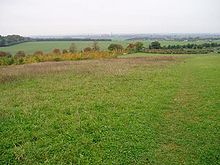
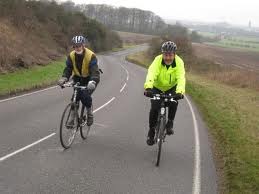
Gog Magog Hills are a range of low chalk hills, extending for several miles to the southeast of Cambridge in England. A real hill – especially when trying to cycle up it!

Lime Kiln Hill

Another real hill. Running along a chalk outcrop near Cherry Hinton where there used to be a Limekiln.

A hoard of Roman coins were found around Lime Kiln Hill.

Market Hill

It is thought that this might have been called Cooks Row prior to being named Market Hill. Market Hill (aka the Market Square) is the location of the marketplace in central Cambridge.  Operating as a marketplace since Saxon times, a daily outdoor market with stalls continues to run there.

Peas Hill

This was the home of the fish market ‘peas’ may have come from the Latin pisces, a fish. Records state that this hill was once at the top of a hill that led from the River Cam.  Prior to the arrival of Kings College, and other Colleges along the famous Backs, the area along the river front was teaming with wharves and warehouses and bustling locals using the river for trading purposes.

Pound Hill

Was near the former Pound Green where stray animals were rounded up by the ‘pindar’.  Part of the old outer ring of the Roman settlement.


Senate House Hill

This is where the Senate House, designed by James Gibbs in 1722, stands.

King’s Parade, with Trinity Street, was the High Street in the C16 when it was lined with shops and tenements, even after King’s College Chapel was built. In 1828, King’s

College screen was erected, sweeping away the humble buildings, and creating a

dividing line between the colleges on the west and the town on the east.

St Andrew’s Hill

Hard to find evidence of this Hill! It runs along the side of St Andrew the Great 1842-3 built on the site of a medieval church.


Naughty Nuns

The origin of the Priory of St Radegund is not clear.During the 12th century nuns were granted land and property to support ‘the nuns of cell newly founded outside the town of Cambridge’.   The new Priory accumulated a healthy property portfolio that included farms in the local villages,houses in Cambridge and two churches (All Saints in the Jewry, now All Saints Passage, and St Clement Danes, in Bridge Street) as well as fishing and river rights along the Cam.

However, such benefits although numerous were small scale and the convent was never wealthy.

When, in 1277 their bell-tower fell in and fire twice, 1313 and 1376, destroyed their home and possessions , the shortage of funds was pressing. On a visit by an Archbishop in 1373 the prioress was accused of failing in her duties as she had allowed the building to deteriorate, let the nuns go out of the cloister with little excuse, failed to make one of the sisters get up to attend matins and welcomed friars and scholars to visit her at inopportune times.

Another Archbishop visiting the Priory in 1389 found one of the nuns living in sin and a secular habit.

Things were no better in the 15th century. A Bishop Alcock visited in 1487 and declared that all the nuns were unfit.  By 1496 the priory was in utter ruin.

It was suggested that, the priory, its lands and assets:

‘through the negligence and the imprudent and dissolute character and incontinency of the Prioresses and religious women of the said house, caused by its proximity to the University of Cambridge, are to such an extent dilapidated, destroyed, devastated, alienated, diminished and removed and the women themselves are reduced to such great want and poverty that they do not have the means to maintain or support the divine offices, hospitality or other matters of mercy and piety there to be practised according to the original foundation and ordinance of their founders or in any way to sustain or support themselves’.

Whatever the truth of this, in June 1496 Henry VII gave Bishop Alcock permission to found what was to become Jesus College on the site. The master, fellows and scholars of the new college were to inherit:

‘the said house or Priory and of all and each of its lands, tenements, rents, services, fees, portions and other possessions bestowed of old upon and gathered in the same Priory, both spiritual and temporal, and the jewels and any ecclesiastical ornaments whatsoever belonging to and pertaining to the same’

This still meant the rents from property in the surrounding villages and houses in Cambridge, sale of corn and stores, tithes,payments from the vicar of St Clements, receipts for dues payable in the market and profits from the fair which the nuns were allowed to hold on the Festival of Assumption.

This was the Garlick Fair, celebrated annually within the walls of the nunnery in what was the Nuns’ Close, now the Master of Jesus College’s garden.  Later the College moved the fair to the western part of the Close, where it gave its name to Garlick Fair Lane, now Park Street.

The Garlick Fair was never grand and few details remain in written records. Nevertheless, its longevity must mean that it had some economic and social significance in the Cambridge area. It continued into the 19th century.

Whether the nuns of St Radegund were as decadent as was accused or were simply struggling to survive in a male dominated world, we will never know.  They certainly fell foul of the trend to endow colleges at Cambridge, shared by kings and other wealthy benefactors with an eye to the immortality of their souls.