Tag Archives: Cambridge

Bloody Beginnings

Oxford, 1209: The shocked young scholar stared down at the dead body.  It wasn’t clear what had taken place in that room – perhaps a blind act of passion – but at the sight of the motionless girl, he instinctively feared for his life and knew he must take flight.

As the news of the young woman’s death, most likely a prostitute, spread, the people of Oxford demanded revenge.  First, the two friends who’d shared the scholar’s room were hunted down. They were dragged to the castle, then to the gallows.  In normal times, the ecclesiastical authorities would have exerted themselves and claimed immunity for those in minor religious orders.  The two scholars would have been saved. But in 1209, a quarrel between King John and Pope Innocent III regarding the appointment of a new Archbishop of Canterbury resulted in the King’s excommunication.  He wasn’t in the mood to look kindly upon the clerical scholars, so he did nothing to prevent their hanging. Unprotected from the mob, hundreds of fearful scholars fled Oxford in search of a new place to learn. Several settled on Cambridge.

This was the story as told by the monastic chronicler, Roger of Wendover (d. 1236), and vividly reimagined by Susanna Gregory in Bloody Beginnings.  Are the origins of Cambridge University due to the murder of a prostitute? We can only speculate. Yet alternative explanations are far less credible, wrote Rowland Parker in his 1983 book, Town and Gown: The 700 years’ war in Cambridge.

Whatever we might believe, it is a fact that the new arrivals in Cambridge were warmly welcomed. They were fair game to anyone who could turn a profit at their expense. Already, Cambridge was an important inland port.  It’s then tidal river flowed into the Ouse and into the Wash. The town housed the fifth-largest Jewish community in England and was edging its way into the top twenty wealthiest towns, ranked by tax.  The town had secured royal charters granting them many rights.  In 1209, Cambridge, in the eyes of the law, was a fully-fledged independent town, a free borough of free men, forever.

As more and more scholars arrived, many fleeing riots in Paris, the price of spare rooms doubled, as did the cost and quality of bread and ale.  No one thought the ‘foreigners’ would stay.  But as their numbers swelled, the novelty of their presence altered to a deep dislike of the arrogant behaviour of exuberant,  teenage boys away from home for the first time, with little supervision.  

They may have been undertaking religious study, but they weren’t all meek-minded serious scholars.  Many were younger sons for whom the ‘church’ would provide a living.  This was the first and last opportunity for them to enjoy carefree living.  Many, but not all, drank ale beyond their capacity and swaggered around town, believing they were men.  They sought and seduced susceptible women, sometimes with the promise of marriage. Insolent remarks were tossed at passing townsmen of any rank. A surprising amount could be tolerated whilst their presence remained peaceful and lucrative. But this was about to change.

The history of the long drawn-out rivalry between town and gown started in 1231 when Henry III sent a letter to the mayor and bailiffs of Cambridge telling them: a multitide of students, from this country and overseas, come to our town of Cantebrigge, which pleases us very much, for it benefits our kingdom and does us honour, and you must be pleased to have the students among you.  But we hear that the charges in your inns and lodging-houses are so exorbitant that, unless you do something to moderate them, the students will be obliged to leave your town, and we do not want that to happen. (Parker, p19)

Due to the many private vendettas between northern and southern scholars, and resentment from the young men of the town, bloodshed on the streets was not uncommon. In 1249, violent scuffles left several wounded or slain. Just over a decade later, a minor skirmish escalated into an alarming affray, resulting in the execution of 16 townsmen and the King pardoning 28 southern scholars.  The rift with Rome had been healed. Ecclesiastical law once again protected those training for holy orders. It was the townspeople who answered to the law of the land.

But overcharging and street brawling were not the only problems the King was invited to solve. In 1234, he issued letters patent prohibiting earls, barons, and knights from ‘tourneying’ to Cambridge for the regular tournament that took place just outside Cambridge.  It turned out that the chancellor was gravely concerned that the excitement of such an event would distract the scholars. 

Such tournaments took place up and down the county, with knights from all over the kingdom keen to show their prowess.  The Cambridge tournament was a smaller affair. Local nobility and gentry put on fine displays of valour and chivalry. It was a spectacular day out, attracting huge numbers eager to gamble, brawl and drink. There was no way the young scholars would miss out on this event.  But under the ban everyone missed out, especially the townspeople who’d once relied on the event to boost their income. 

Over the next two centuries Kings and Queens eroded the towns autonomy until Cambridge was managed to suit the needs of the university. It could be argued the case remains the same today.

Sources:

British History online

Cooper, C. H. Annals of Cambridge Vol 1(1843)

Parker, R. Town and Gown – The 700 Years War in Cambridge (1983)


Donkey Common or Donkey Green?

grdonkeyb

So just to put you right it is Donkey Common or Donkey (‘s) Common.

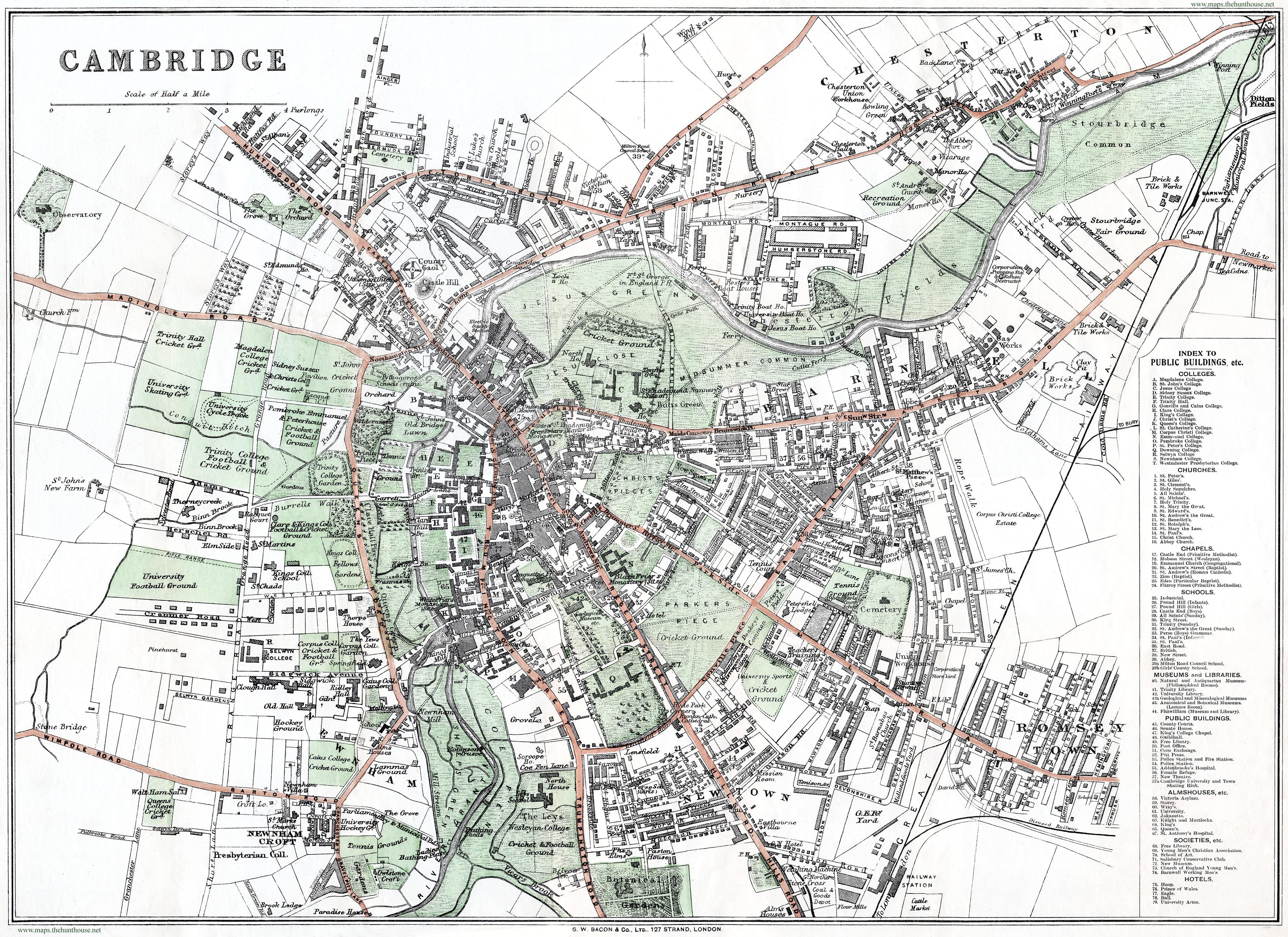
This was originally a piece of common land near Parkers Piece.  Some of it got made into Petersfield; the green on the other side of Mill Road. Part of it was built on and what remains is where MRWF erect a marquee to welcome people to the fair.


Large_Map_of_Cambridge

During World War II there were temporary A.T.S. huts on the common.

War time memories of Donkey Common (taken from BBC Archive)

Eventually we were given our postings and I was sent to Cambridge where there was a Holding Unit on a common called Parker’s Piece, and our section was Donkey Common.

The idea was that people would be sent there before going on to somewhere else … 

Our huts were wooden with wooden beds, and we slept on biscuits — a kind of mattress divided into three. There was a stove pipe in the middle of the hut and hut blocks were in an ‘H’ formation with washing facilities in the middle. As we lived on Donkey Common our C.O. decided that we ought to have a donkey so one was acquired. Two of us used to have to take the donkey to the blacksmith’s just off the main road near the station to be shod.

After the war when housing was in short supply there was a request to use these temporary shelters for much needed housing.

This extract comes from Hansard:

Surplus Huts, Cambridge

HC Deb 21 June 1949 vol 466 cc8-98

15. Mr. Symonds

Asked the Secretary of State for War if he will subdivide the campsite at Donkey’s Common, Cambridge, and hand over those huts, which are surplus to military requirements, to the local authority for emergency housing purposes.


In 1963 a swimming pool was built on the Common, followed by a multi story car park in 1971, YMCA in 1974 and Kelsey Kerridge Sports Hall in 1975.

A skateboarding facility was built in 2006.

Cambridge is surrounded by beautiful open spaces. Each one has a rich history that reflects the social and economic conditions of several centuries.


Mill Road Winter Fair

As the countdown for Mill Road Winter starts I thought it timely to give Mill Road a bit of a ‘shout out’.

It is hard to remember the early days of the Winter Fair when just a trickle of local residents curiously ventured along the road wondering what all the fuss was about.  However, behind the scenes local resident Suzy Oaks had a vision for an all-encompassing community celebration and was working tirelessly to put Mill Road on the map so others could experience its unique diversity.

Up until 3 years ago the fair was still relatively low key.  However, the break through came in 2010 when, finally, after a tremendous amount of work from the Mill Road

Fair Committee, a partial road closure was permitted. What a liberating experience that was, and helped to encourage more people to visit shops and events ‘over the bridge’ in Romsey Town.

At last years Winter Fair the road closure was extended, closing Mill Road from Donkey Common to Romsey Mill.  But that year the Fair was tinged with sadness as Suzy died earlier in the year after a brave battle with cancer.  As a tribute to her the community got together to create ‘Shhh … for Suzy’, and at 11.00am hundreds of people linked up, holding hands along the length of Mill Road to remember a remarkable woman.

2011 also saw the first year of the new Food Hall at Gwydir Street where local independent food producers set up stalls to showcase their goods.

This year we see the first parade, collaboration between Parkside Federation and Artichoke. This is going to be real visual treat.

So what makes this annual event such a success?

It is the coming together to celebrate neighbourhood friendship and the rich diversity of an independent road that is proud of its history.

Historically Mill Road was seen as being ‘out of town, and did not come under the jurisdictions of the University.  Remote enough to risk the sitting of the Cambridge Union Workhouse at one end in 1838 and the Infectious Diseases Hospital in 1884 at the other.

The railway workers, who came to live in Mill Road after the building of the railway in 1845, who were proud of their independent community.

Over the years, Polish, Chinese and Indian communities have also made their home in the Mill Road area and left their mark.  All giving Mill Road its distinctive cultural flavour.

It is the cultural mix, together with a growing number of local residents passionate about preserving and celebrating ‘real Cambridge’ that makes Mill Road Winter Fair such a huge success.


Naughty Nuns

The origin of the Priory of St Radegund is not clear.During the 12th century nuns were granted land and property to support ‘the nuns of cell newly founded outside the town of Cambridge’.   The new Priory accumulated a healthy property portfolio that included farms in the local villages,houses in Cambridge and two churches (All Saints in the Jewry, now All Saints Passage, and St Clement Danes, in Bridge Street) as well as fishing and river rights along the Cam.

However, such benefits although numerous were small scale and the convent was never wealthy.

When, in 1277 their bell-tower fell in and fire twice, 1313 and 1376, destroyed their home and possessions , the shortage of funds was pressing. On a visit by an Archbishop in 1373 the prioress was accused of failing in her duties as she had allowed the building to deteriorate, let the nuns go out of the cloister with little excuse, failed to make one of the sisters get up to attend matins and welcomed friars and scholars to visit her at inopportune times.

Another Archbishop visiting the Priory in 1389 found one of the nuns living in sin and a secular habit.

Things were no better in the 15th century. A Bishop Alcock visited in 1487 and declared that all the nuns were unfit.  By 1496 the priory was in utter ruin.

It was suggested that, the priory, its lands and assets:

‘through the negligence and the imprudent and dissolute character and incontinency of the Prioresses and religious women of the said house, caused by its proximity to the University of Cambridge, are to such an extent dilapidated, destroyed, devastated, alienated, diminished and removed and the women themselves are reduced to such great want and poverty that they do not have the means to maintain or support the divine offices, hospitality or other matters of mercy and piety there to be practised according to the original foundation and ordinance of their founders or in any way to sustain or support themselves’.

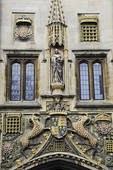
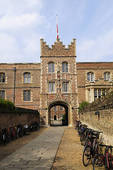
Whatever the truth of this, in June 1496 Henry VII gave Bishop Alcock permission to found what was to become Jesus College on the site. The master, fellows and scholars of the new college were to inherit:

‘the said house or Priory and of all and each of its lands, tenements, rents, services, fees, portions and other possessions bestowed of old upon and gathered in the same Priory, both spiritual and temporal, and the jewels and any ecclesiastical ornaments whatsoever belonging to and pertaining to the same’

This still meant the rents from property in the surrounding villages and houses in Cambridge, sale of corn and stores, tithes,payments from the vicar of St Clements, receipts for dues payable in the market and profits from the fair which the nuns were allowed to hold on the Festival of Assumption.

This was the Garlick Fair, celebrated annually within the walls of the nunnery in what was the Nuns’ Close, now the Master of Jesus College’s garden.  Later the College moved the fair to the western part of the Close, where it gave its name to Garlick Fair Lane, now Park Street.

The Garlick Fair was never grand and few details remain in written records. Nevertheless, its longevity must mean that it had some economic and social significance in the Cambridge area. It continued into the 19th century.

Whether the nuns of St Radegund were as decadent as was accused or were simply struggling to survive in a male dominated world, we will never know.  They certainly fell foul of the trend to endow colleges at Cambridge, shared by kings and other wealthy benefactors with an eye to the immortality of their souls.